


Solutions Plan
RainsACAD offers solutions across different subjects, grade levels and learning goals, runs a science outreach and innovation platform, and has worked with more than 6,000 middle school students through personalised learning programmes (cumulative, 2021–2025; source: internal enrolment records).

FIRST Robotics Competition(FRC)
FIRST Robotics Competition (FRC) is a robotics competition for high school students in grades 9–12 (typically ages 14–18), run by FIRST (For Inspiration and Recognition of Science and Technology), the non-profit founded by inventor Dean Kamen. Each season, teams design, build and program a competition robot from industrial-grade components, then compete at regional and district events and at the FIRST Championship.
FRC combines fast-paced match play with real engineering discipline. Students work with the same motors, control systems and fabrication processes used in industry, supported by professional mentors. In the 2025 season, more than 93,000 high school students on 3,700+ teams took part, with teams from 35 countries (source: FIRST official season data).
Participants can apply for scholarship opportunities listed through FIRST's scholarship programme, offered and administered by independent providers; eligibility and award decisions rest with each provider, and FIRST does not administer or fund these scholarships.
For students weighing an engineering path, FRC is a structured way to test that interest early — building, iterating and competing as part of a team.

FIRST Tech Challenge(FTC)
FIRST Tech Challenge (FTC) is a robotics programme for students in grades 7–12 (ages 12–18), run by FIRST (For Inspiration and Recognition of Science and Technology), the non-profit founded by inventor Dean Kamen. Teams work with mentors to design, build, program and drive classroom-scale robots, competing in a new game released each September: alliances of two teams play an autonomous period followed by driver-controlled matches.
FTC is built around engineering practice. Students program their robots in Java (or Blocks and OnBot Java), keep an engineering notebook, and take part in community outreach alongside competition. Approximately 8,800 FTC teams competed in the 2024–2025 season, and the programme reaches more than 109,000 students in 81 countries (source: FIRST official data).
Participants can apply for scholarship opportunities listed through FIRST's scholarship programme, offered and administered by independent providers; eligibility and award decisions rest with each provider, and FIRST does not administer or fund these scholarships.
For students in middle and high school, FTC is a structured way to test an interest in engineering early — building, iterating and competing as part of a team.

China Thinks Big (CTB)
China Thinks Big (CTB) was first launched in 2012 and is a research and innovation challenge open to secondary school students. Teams start from a question they care about, carry out academic research and social practice, and present their findings and solutions at online and on-site events.
CTB is organised around project-based learning. Students define their own research question, gather and analyse evidence, test their ideas through practice, and defend their work in front of reviewers. The programme follows a “Think Big, Start Small” principle: begin with something close to everyday life, then work through it with a structured research method.
Across 15 editions since 2012, CTB has worked with academics and practitioners from universities and industry to set research topics and review projects, and more than 100,000 secondary school students have taken part (source: CTB official data).
For students who want to try research for themselves, CTB is a structured way to run a project end to end — asking a question, gathering evidence, and defending a conclusion.

Student Investment Challenge(SIC)
SIC (Student Investment Challenge) is an investing challenge for students in grades 6–12, endorsed by the Council for Economic Education (CEE) and academically governed by the America China Modern Economics Society (ACME). The programme is operated by SKT.
CEE's endorsement means alignment rather than accreditation: SIC's curriculum and judging frameworks are aligned with CEE's national standards for economic education and personal finance. ACME's faculty review the judging rubric.
Students work on a simulated market, not with real capital. In the Junior division the preliminary stage is simulated trading; in the Senior division simulated trading accounts for about 10% and a team investment strategy report for about 90%, judged on knowledge application, analysis, critical thinking and report writing.
Teams set out their view of a selected company and defend it — what the business does, where it sits within its industry, what it may be worth, and what could go wrong. ESG factors and risk handling are scored judging dimensions.

Wharton Global High School(WGHS)
The Wharton Global High School Investment Competition (WGHS), formerly known as KWHS, is a free, online investment competition run by the Wharton Global Youth Program at the Wharton School of the University of Pennsylvania. It is open to high school students in grades 9–12 worldwide, who take part in teams of four to six with a teacher from their school as advisor.
Teams work on an online stock market simulator across a season. Their work covers strategy building, teamwork and communication, risk and diversification, and company and industry analysis. In the 2024–25 season, 4,994 teams from 87 countries took part (source: Wharton Global Youth Program).
The competition has run annually since the 2011–12 season, when it began as a Philadelphia-area event and later expanded internationally. There are no entry fees.

National Economics Challenge(NEC)
The National Economics Challenge (NEC) is an economics competition for high school students run by the Council for Economic Education (CEE). In China, the national round is run by SKT (Hanlin), CEE's authorised China operator since 2016.
Teams of three to four students are tested on microeconomics and macroeconomics as well as their knowledge of the world economy, and are assessed on their ability to apply problem-solving and critical-thinking skills to current events. Close to 10,000 students take part each year (source: CEE).
CEE, founded in 1949, publishes the national standards for financial literacy used in US K–12 education.

International Genetically Engineered Machine(iGEM)
The International Genetically Engineered Machine (iGEM) began in 2003 as a course at the Massachusetts Institute of Technology (MIT). It spun out of MIT in 2012 and became an independent non-profit, the iGEM Foundation, in 2013. It now runs separate high school, undergraduate and overgraduate tracks.
Teams work on a synthetic biology project across a season, moving through the same three parts of the competition: wet lab work, where they design, build and test genetic systems; dry lab work, including mathematical modelling and software; and human practices, where they engage with stakeholders and the wider public.
In 2025, more than 400 teams from over 40 countries took part, with more than 10,000 participants (source: iGEM). Work is presented at the annual Grand Jamboree, where teams are reviewed by judges and meet teams from other institutions.

Brain Bee
The Brain Bee is a neuroscience competition for secondary school students. It was founded in 1998 by Dr Norbert Myslinski at the University of Maryland, and the first international round was held in Montreal in 2008. In 2018 the competition was formally established as the International Brain Bee (IBB), a non-profit educational organisation, with the American Psychological Association (APA), the Dana Foundation, FENS, IBRO and the Society for Neuroscience (SfN) as founding partners; the Alzheimer's Association later joined as a governing partner.
The competition runs in more than 50 countries, with around 175 local rounds and over 25,000 students taking part each year (source: IBB / SfN). Students enter a local round, top performers advance to a national round, and national winners meet at the annual World Championship.
Brain Bee entered China in 2013. In 2024, 2,542 students from 376 schools entered the regional round, and 550 advanced to the national round (source: Brain Bee China).

The National Youth Drone Competition
The National Youth Drone Competition is organised by the Chinese Society of Aeronautics and Astronautics (CSAA). It has run annually since 2017, and its ninth edition took place in 2025.
The competition has been included in the Ministry of Education's list of national competitions for primary and secondary school students since the 2020–21 academic year, and appears in the 2025–2028 list issued under 教监管厅函〔2025〕7 号.
The 2025 finals were held in Chongqing, with about 17,000 students from close to 6,000 schools across 32 provincial-level regions and Hong Kong and Macao. Events were grouped into five categories — flight control, programming, combined, virtual and creative — across 24 individual events. Each season runs from municipal and provincial qualifying rounds to a national final (source: CSAA).

HCANDERSEN ART AWARD
The H.C. Andersen Art Awards were established in Odense, Denmark, by the Denmark H.C. Andersen Culture & Art Committee, together with the H.C. Andersen Samfundet (Copenhagen). The awards are held annually and are open to artists worldwide.
The programme takes its theme from Hans Christian Andersen's fairy tales and invites entries from children, young people and adult artists. Categories, age groups and entry requirements are set out in each year's call for entries.
Selected works are reviewed by an international jury of artists and are shown alongside works from more than ten countries, including Denmark, Sweden, Malaysia, Singapore, Japan and the Republic of Korea. Previous editions have been held at Copenhagen City Hall, Aarhus City Hall and Odense City Hall (source: organiser).
This award is distinct from the IBBY Hans Christian Andersen Award, which is presented by the International Board on Books for Young People.

World Robot Contest(WRC)
The World Robot Contest (WRC) is organised by the Chinese Institute of Electronics. It has been held annually since 2015, and the 2024 season was its ninth edition, with teams from more than 20 countries taking part.
The contest runs in three tiers — regional selection rounds (WRCT), championship rounds (WRCC) and a final (WRCF) — and covers three directions: research, skills and science outreach. Its events include the Inclusive Robot Challenge, the BCI (brain-computer interface) Robot Competition, the Robot Application Competition and the Youth Robot Design Competition.
Across the 2024 season, more than 300 rounds were held at city, provincial, national and international level, and entries for the year passed 200,000 for the first time. Since 2015 the contest has drawn close to 500,000 participants from more than 20 countries (source: Chinese Institute of Electronics).
Robo Genius is one of the events within the Youth Robot Design Competition. It is open to primary school students only, and is organised into general, advanced and AI divisions.

STEAM Growth Exploration Camp Plan
The STEAM Growth Exploration Camp is a project-based learning (PBL) programme for secondary school students. Participants work on one interdisciplinary project across the camp, combining arts, science and engineering inputs.
The camp runs for seven days. Students take part in a sequence of themed modules — and in each module work with practitioners from the field it covers. Each module includes a session on what study and work in that field involves, and on the pathways students can take from it.
Students work in small teams and present their project at the end of the camp. Assessment is based on the project work and the final presentation.
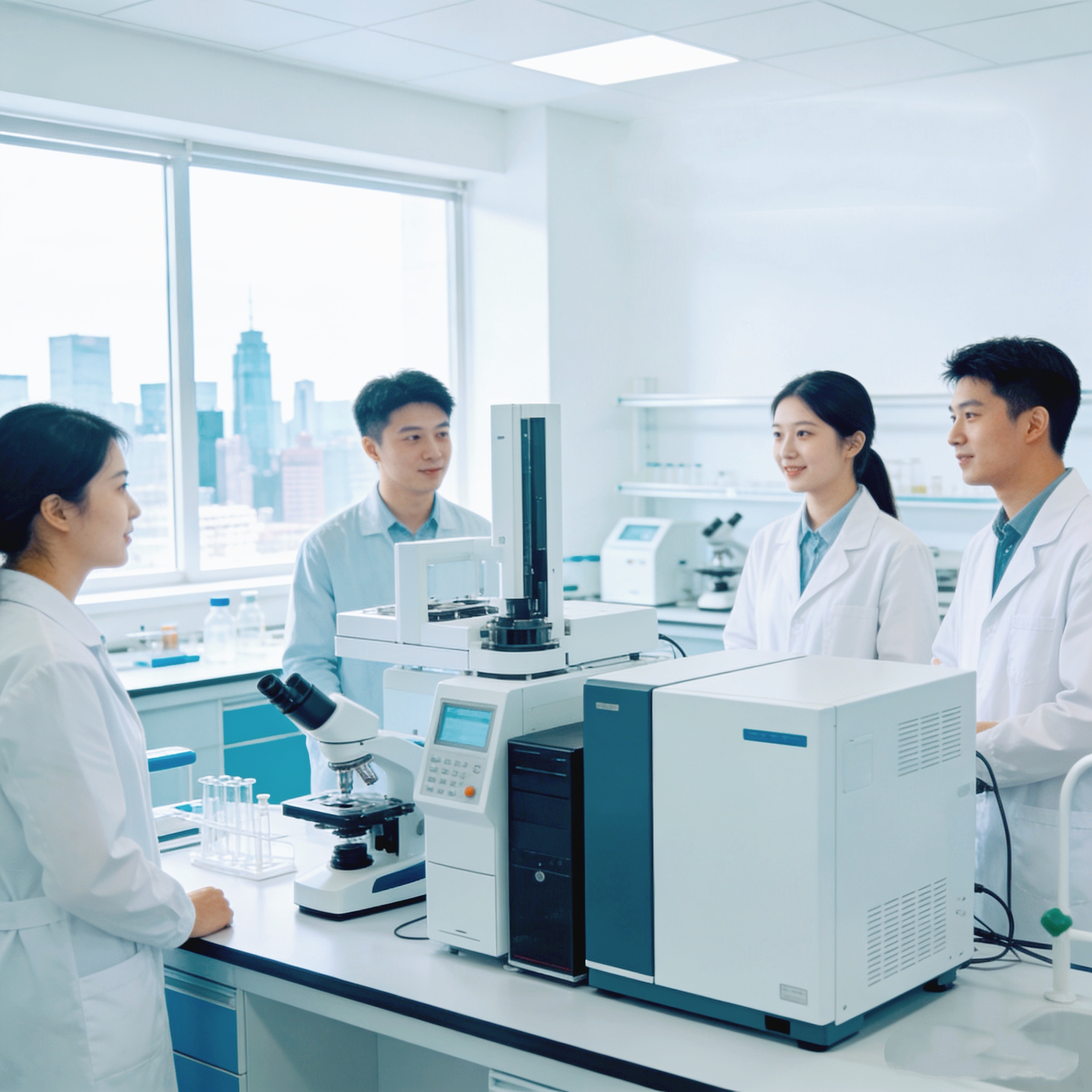
Domestic and International Research Elite Program
RainsACA runs the Domestic and Foreign Research Elite Programme. The programme selects researchers working in artificial intelligence, life and health, new materials, advanced manufacturing and carbon neutrality.
Selected participants receive, for nearly five years: a research grant of 2142 per year; access to RainsACA cooperations platform; collaboration with some instituions in Beijing or Shanghai or any other places and a team of research staff.
Participants pursue their own research agendas within the areas above. The programme holds some cohort meetings and review sessions each year.
Applications are open to researchers who love to join in. Less places per cohort. Selection is by RainsACA official.


 沪公网安备31011402009545号